

Stellite 6K vs Stellite 6: Composition, Product Form, Wear Behavior and RFQ Guide
Stellite 6K vs Stellite 6: Composition, Product Form, Wear Behavior and RFQ Guide
Stellite 6K and Stellite 6 are cobalt-chromium-tungsten-carbon wear alloys, but they are not the same product. Stellite 6 is a general-purpose cobalt wear alloy available in multiple forms, including castings and hardfacing consumables. Stellite 6K is a higher-carbon wrought, hot-rolled material developed for industrial cutting and scraping edges. Their nominal chemistry overlaps, yet carbon range, manufacturing route, product form, toughness, edge behavior and qualification route differ.
This guide is for equipment engineers, maintenance teams and buyers deciding between a solid blade, cast component, wrought blank or Stellite 6 hardfacing. It uses current Kennametal Stellite information as the brand owner’s primary reference. It does not authorize a trademark substitution, welding procedure, food-contact use, pressure application or service-life claim. Final material and process must follow the approved drawing, duty and purchase specification.
Stellite is a branded alloy family
Stellite is a Kennametal trademark covering a family of cobalt-based alloys. A generic request for “stellite” is incomplete because family members use different carbon, chromium, tungsten or molybdenum levels and product routes. When a brand designation is contractually required, state it and the permitted source. If an equivalent cobalt alloy is acceptable, define the technical acceptance criteria and approval process rather than relabeling it.
The brand owner’s data should be treated as alloy-specific information, not a guarantee for every supplier’s “equivalent” chemistry. Product form, processing and test condition influence final properties. A chemistry certificate alone cannot show carbide distribution, hot-rolling history, casting soundness or hardfacing dilution.
Nominal chemical composition comparison
| Element, mass % | Stellite 6K | Stellite 6 | Selection meaning |
|---|---|---|---|
| Cobalt | Balance | Balance | Co-Cr alloy matrix supports high-temperature wear/corrosion behavior. |
| Chromium | 28.00-32.00 | 27.00-31.00 (6K comparison page) or 27-32 on alloy page | Supports corrosion/oxidation response and chromium-rich carbides. |
| Tungsten | 3.50-5.50 | 3.00-6.00 | Contributes carbide and high-temperature strengthening behavior. |
| Carbon | 1.40-1.90 | 0.90-1.40 | Higher 6K carbon supports more carbide/hard edge behavior but changes toughness. |
| Ni, Si, Fe | Controlled maxima shown by producer | Controlled maxima shown by producer | Use the exact product specification and certificate. |
| Others | Mn, Mo | Mn, Mo | Do not infer acceptance limits from a summary table. |
Ranges above summarize Kennametal’s published comparison. The current manufacturer data and purchase specification control. The main numerical difference is carbon, but carbon should not be evaluated alone. Carbide amount and morphology depend on composition and processing, while the matrix, defects, geometry and surface condition affect component behavior.
Product form is the first practical difference
Kennametal describes Stellite 6K as a hot-rolled material for industrial cutting and scraping, supplied as blanks or finished knives. Hot rolling works the cast structure into wrought strip or plate and supports continuous edge products. Stellite 6 is offered in cast, powder-metallurgy and welding-consumable forms under different UNS, AMS and AWS designations.
| Required component | Likely starting point | Questions before approval |
|---|---|---|
| Long cutting or scraping knife | Stellite 6K wrought blank | Thickness, straightness, edge, holes, finish and mounting load. |
| Complex solid wear component | Stellite 6 casting or another qualified alloy | Section, feeding, shrinkage, NDT, machining and impact. |
| Local wear surface on a substrate | Stellite 6 hardfacing consumable | Process, substrate, dilution, layers, cracks and finish allowance. |
| Small near-net-shape part | Qualified casting or powder-metallurgy route | Specification, density, microstructure and lot testing. |
| Repair of an existing edge | Engineering disposition, not automatic 6K/6 substitution | Base identity, damage, heat input and post-repair qualification. |
Carbides and the cobalt-chromium matrix
Kennametal explains Stellite wear resistance through hard complex carbides dispersed in a cobalt-chromium alloy matrix. Carbon level helps determine carbide population. Chromium and tungsten participate in carbide and matrix behavior, while cobalt supports hot hardness and galling resistance. The resulting system can resist adhesive wear, erosion and certain corrosive environments, but no single mechanism describes every application.
More carbide can improve edge retention or abrasion response while reducing ductility and tolerance of shock, bending or stress concentration. Stellite 6K’s published typical hardness is about 43-47 HRC. Stellite 6 is listed around 36-45 HRC, depending on product condition. Overlapping hardness does not make the alloys interchangeable because route, carbon, structure and geometry differ.
Wear mechanism selection
| Wear mechanism | Stellite 6K screening | Stellite 6 screening |
|---|---|---|
| Cutting/scraping edge | Purpose-developed wrought option; evaluate edge load and chipping | Possible only through an approved geometry/route, not a direct blank substitute |
| Metal-to-metal galling | Can be relevant but geometry/product availability governs | Widely used general-purpose alloy; manufacturer notes self-mated use |
| Cavitation/erosion | Requires application evidence | Manufacturer identifies good cavitation-erosion resistance |
| Hard-particle abrasion | Higher-carbon edge may help in a controlled cutting geometry | General-purpose response; hardfacing dilution and finish matter |
| Impact/shock | Check thin edge, mounting and notch sensitivity | Generally described as having useful impact resistance, but route matters |
| Corrosive wear | Test the actual chemical, concentration, temperature, crevice and galvanic condition. | |
Cutting-edge design for Stellite 6K
A long-wearing alloy cannot compensate for an unstable blade design. Specify bevel angle, land, edge radius, thickness, flatness, straightness, hole location, surface finish and mounting support. Review how the edge contacts product, how overload is released and whether the holder creates bending. Thin hard edges can chip if foreign material, alignment or vibration differs from the intended duty.
Kennametal lists industrial filtration, food processing, viscose fiber, textiles and packaging among 6K applications. These examples are not universal approvals. Food-contact, cleanability, contamination and regulatory requirements must be evaluated for the finished knife and market. Processing chemicals require exact corrosion compatibility, not an industry label.
Stellite 6 castings and solid components
For a casting, provide the complete geometry, section map, functional surfaces and service load. Cobalt alloys have high alloy content and demanding solidification; hot spots, abrupt transitions and inadequate feeding can create shrinkage or cracks. Define where machining, NDT or metallographic sampling is meaningful. A separately cast test coupon may not represent a heavy junction.
Do not use a cast Stellite 6 property table to qualify a wrought 6K knife, and do not apply wrought 6K tensile data to a casting. Kennametal publishes typical 6K tensile strength, yield strength and elongation, but those values depend on the stated material and test condition and are not automatic purchase guarantees.
Stellite 6 hardfacing: dilution changes the deposit
Stellite 6 is available under AWS/ASME classifications for rods, wires and electrodes. A deposited overlay is not identical to an undiluted alloy analysis. Substrate melting, welding process, current, travel speed, preheat, interpass temperature, number of layers and bead placement influence dilution, microstructure, cracking and final chemistry.
The welding procedure specification must identify base material, consumable classification and source, position, heat input controls, layer count, permitted cracks, machining stock and inspection. Pressure-containing, nuclear, food, valve and regulated applications may impose additional code and qualification requirements. “Stellite 6 overlay” alone is not an acceptance plan.
Overlay acceptance questions
- Is chemistry required on the top layer, and how is dilution handled?
- What minimum finished thickness remains after machining?
- Are transverse checking cracks permitted, limited or prohibited?
- Which NDT method and acceptance standard apply at each stage?
- How are bond integrity, hardness and final dimensions sampled?
- Is postweld heat treatment required or restricted by the substrate?
Machining and finishing
Kennametal notes that Stellite 6 can be turned with carbide tooling, but actual machinability depends on route, hardness, interrupted cuts, rigidity and stock. Stellite 6K blanks may require grinding, EDM, laser or other qualified operations depending on thickness and edge. Thermal cutting can create a heat-affected zone or distortion that must be addressed in the process plan.
Control grinding heat and contamination. A sharp edge is a safety hazard during handling and inspection; packaging and fixtures must protect both the edge and personnel. Final surface finish can influence friction, product release, corrosion initiation and cleanability. Define measurement methods for thin or flexible blades.

Corrosion and high-temperature boundaries
Stellite 6 is described by its producer as resisting many forms of mechanical and chemical degradation over a wide temperature range and retaining useful hardness to elevated temperature. That is screening information, not a corrosion or creep design curve. Exact acids, alkalis, salts, process fluids, gas composition, oxygen potential, temperature and velocity are needed.
Cobalt alloys can be unsuitable for particular contamination, regulatory or cost constraints. At high temperature, substrate expansion, oxide, thermal cycling, diffusion and coating mismatch matter. A hardfaced steel component and a solid cobalt alloy blade do not have the same thermal response. Validate the complete assembly.
Inspection and traceability plan
| Inspection layer | 6K wrought blank/knife | 6 casting or overlay |
|---|---|---|
| Identity | Manufacturer alloy/lot certificate and marking | Heat, consumable lot, substrate and procedure linkage |
| Chemistry | Product specification and agreed analysis | Heat analysis or top-layer analysis with dilution basis |
| Dimensions | Thickness, straightness, flatness, holes and edge geometry | Casting CTQs or finished overlay thickness/profile |
| Hardness | Method, location and product condition | Map by casting section or overlay layer/finished surface |
| NDT | Surface condition and edge acceptance where justified | Method, stage, coverage and written acceptance criteria |
| Microstructure | Only when contractually justified and sampled correctly | Carbide/matrix or bond evaluation at defined locations |
Failure analysis: edge chipping, wear and overlay damage
Preserve orientation, mating parts, operating time and process material. Map the first damage location and record overload, foreign objects, alignment, vibration, temperature and cleaning chemistry. For a knife, distinguish uniform edge recession, microchipping, gross fracture, bending and corrosion. For an overlay, distinguish surface checking, delamination, underbead cracking, substrate deformation and abrasive loss.
Compare chemistry, hardness and microstructure only after checking geometry and service evidence. A hard result does not prove correct grade or adequate support. Do not attribute failure to “brittle Stellite” without identifying origin and load path. Corrective action may involve holder stiffness, edge geometry, process screening, overlay dilution, casting quality or another alloy family.
Controlled comparative trial
- Define baseline alloy, product route, edge/overlay geometry and operating position.
- Keep holder, alignment, surface finish and process conditions constant.
- Trace every trial part to heat, blank, casting or welding-consumable lot.
- Measure initial edge/profile, mass or thickness at repeatable coordinates.
- Record hours, cycles, throughput, chemicals, temperature and abnormal events.
- Inspect at predefined intervals using the same method and personnel criteria.
- Compare wear mode, process quality, downtime and safety, not only calendar life.
- Do not generalize one trial to a different product, machine or environment.
Receiving, storage and installation controls
Verify the packing list, alloy/product-form description, heat or lot identity, certificate and drawing revision before parts are mixed. Inspect 6K knives for transit bending, edge damage, corrosion, hole position and protective packaging. Inspect cast or overlaid Stellite 6 parts for marking, finish, dimensional damage and the agreed surface acceptance. Quarantine unidentified items; appearance and handheld hardness cannot establish the product route.
Installation hold point
Clean and inspect the holder, support faces and fasteners before installing a hard cobalt-alloy component. Confirm alignment, gap, clamping sequence and permitted contact pattern. Do not force a blade flat with bolts or grind a finished component to compensate for a damaged holder without engineering approval. Record the part lot and installed position so later wear can be connected to the correct material and duty.
Total-cost comparison without unsupported life claims
Compare purchase price together with tooling, fabrication, welding qualification, finish machining, inspection, installation, planned change interval and recoverability. A 6K blank can be attractive when a supported cutting edge is the core requirement; a 6 casting or overlay can be better when shape or local coverage controls the design. Neither choice guarantees a lower cost per hour. Use a controlled trial with measured throughput and failure mode before making a fleet-wide claim.
RFQ checklist for Stellite 6K or Stellite 6
- Component name, machine, position, drawing and revision.
- Required branded alloy or engineering-approved equivalent route.
- Product form: 6K hot-rolled blank/knife, 6 casting, rod, wire, electrode or overlay.
- Complete chemistry/specification and manufacturer documentation requirement.
- Wear mechanism, product handled, contact pressure, speed and impact.
- Environment, cleaning chemicals, temperature and regulatory constraints.
- Edge, mounting, casting, machining or overlay geometry and tolerances.
- WPS/PQR, substrate, dilution and layer requirements for hardfacing.
- Chemistry, hardness, dimensions, NDT, microstructure and traceability records.
- Trial quantity, packaging/edge protection, destination and target schedule.
Related products and technical pages
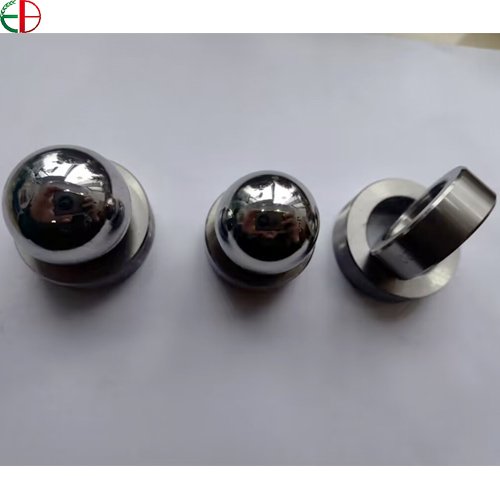
Review Stellite 6 castings, Stellite 6 welding rods and Stellite 6 ball product-form guidance. The quality assurance and factory capability pages provide general context, not automatic qualification for every cobalt-alloy route.
Send the duty and drawing for route review
Use the contact page to send the drawing, required alloy/source, wear mechanism, chemistry/temperature, product form, substrate or holder, inspection, trial quantity and destination. Final alloy, process and acceptance must be confirmed against the approved purchase order.
Engineering boundary: This comparison does not guarantee edge life, corrosion resistance, overlay integrity, pressure-code compliance or equivalence. Stellite is a Kennametal trademark; use of the name and any substitution must follow contractual and technical requirements.