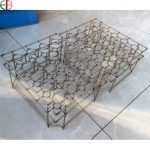
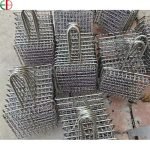
Heat treatment material frame: A “Reliable load-bearing partner”
The high-quality heat treatment material frame is specially designed for scenarios ranging from 200℃ to 1200℃.
Easily solve the pain points of ordinary material frames that “cannot withstand high temperatures and cannot be used for long”.
Choosing the right one can reduce the frequency of frame changes by more than 40%.
Reduce the downtime of high-temperature production lines.
Save tens of thousands of maintenance costs every year.
Four Core Advantages of Heat Treatment Material Frames
Super high temperature resistance: It can withstand a short-term temperature of 1400℃ without softening or collapsing.
Anti-corrosion and rust-free: Prevent material leakage due to corrosion from contaminating the workpiece.
High load-bearing toughness: It can enhance the efficiency of a single heat treatment.
Customized adaptation: Save debugging time.
Five Major Application Scenarios of Heat Treatment Material Frames
Metal heat treatment: Ensure uniform heating of the workpiece.
Metallurgical industry: Suitable for continuous production in metallurgical workshops.
Chemical production: Complies with chemical safety standards.
Building materials industry: Resistant to clinker wear and high-temperature erosion.
In the field of new energy: Ensuring the purity of battery materials.
Four Key Points for Selecting the Right Heat Treatment Material Frame
Select materials based on temperature resistance: Require the supplier to provide a temperature resistance test report of the material.
Select thickness based on load-bearing capacity: Insufficient thickness is prone to deformation. Excessive thickness increases the load on the equipment.
Select the structure by scene: Choosing the wrong structure will reduce efficiency.
Check the process details: Avoid scratching the workpiece or causing water leakage.
Three Tips for Extending the Service Life of Heat Treatment Frames
Avoid sudden temperature changes: Prevent cracking due to excessive temperature differences.
Regular inspection and maintenance: Small cracks will gradually expand if left untreated.
Clean residual materials: Avoid high-temperature sintering of residual materials. Read More