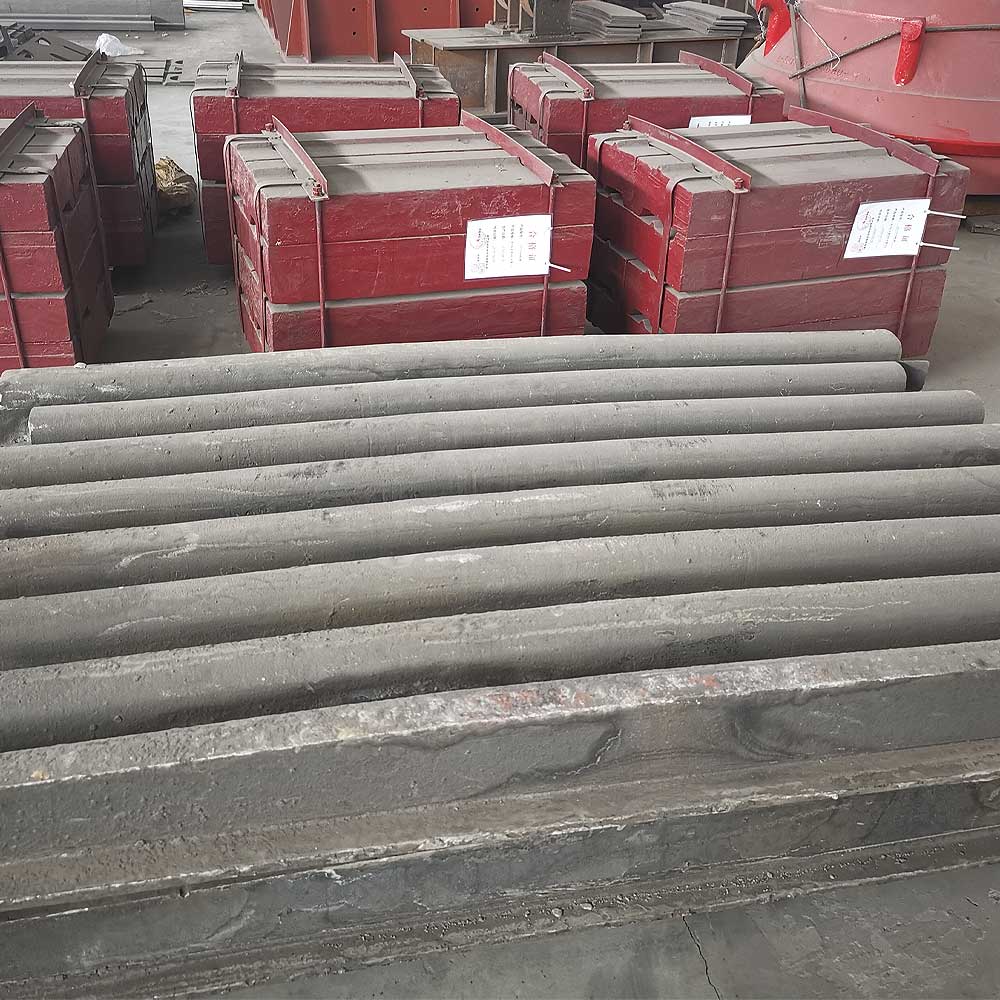
Mining Crusher Liner Castings
In the mining industry, crusher liners are critical sacrificial components that protect crusher chambers from extreme abrasion, impact, and wear caused by hard ores, rocks, and aggregates. Mining crusher liner castings—manufactured via precision casting processes—are engineered to withstand the harshest mining conditions, extend equipment lifespan, reduce downtime, and maintain consistent crushing efficiency.
Not all crusher liner castings are the same: their properties, materials, and designs vary based on the crusher type, material being processed, and operational demands. This guide breaks down the most common types of mining crusher liner castings, their core characteristics, material grades, and ideal applications—optimized for Google SEO to help engineers, procurement managers, and mining operators find the right solution for their needs.
What Are Mining Crusher Liner Castings?
Mining crusher liner castings are wear-resistant components cast into custom shapes to fit different crusher types (jaw, cone, gyratory, impact crushers). They act as a protective barrier between the crusher’s metal frame and the abrasive materials being crushed, preventing premature equipment failure and reducing maintenance costs.
These castings are produced using advanced casting processes (sand casting, resin sand casting, lost foam casting) and high-performance alloys, tailored to deliver superior wear resistance, impact toughness, and durability. The choice of liner type depends on factors like crusher model, material hardness, throughput, and operating environment (e.g., high-impact vs. high-abrasion conditions)[1][6].
Key Properties of High-Quality Mining Crusher Liner Castings
To perform effectively in harsh mining environments, crusher liner castings must具备 the following core properties—these are the primary factors that differentiate high-quality liners from standard options:
-
Superior Wear Resistance: Resists abrasion from hard ores (e.g., granite, basalt) and aggregates, extending service life[1][4].
-
High Impact Toughness: Withstands sudden impacts from large, hard rocks without cracking or breaking[3][7].
-
Excellent Ductility: Bends without fracturing under heavy loads, adapting to dynamic crushing forces[3][7].
-
Precision Fit: Custom-cast to match specific crusher models (Metso, Sandvik, Terex) for seamless integration and optimal performance[5][7].
-
Corrosion Resistance: Withstands moisture, dust, and chemical exposure in mining environments[1][6].
-
Cost-Effectiveness: Balances durability and price, reducing replacement frequency and total operational costs[3][7].
Common Types of Mining Crusher Liner Castings
Mining crusher liner castings are categorized by their design, crusher type, and material composition. Below are the most widely used types, each engineered to address specific operational needs in mining and aggregates applications.
1. High Manganese Steel Crusher Liner Castings
High manganese steel (Mn13, Mn18, Mn13Cr2, Mn18Cr2) is the most common material for crusher liner castings, renowned for its unique work-hardening property—its surface hardens upon impact, while the core remains tough and ductile[7][8]. These liners are ideal for high-impact crushing applications.
-
Core Properties: Exceptional impact toughness (impact energy ≥120 J); work-hardening surface (hardness up to 550 HB after impact); good ductility; cost-effective for high-impact scenarios[3][7].
-
Manufacturing Process: Sand casting or resin sand casting, followed by water quenching (1050–1100°C, 2–4 hours) to achieve a ductile austenitic structure[6].
-
Key Applications: Jaw crusher liners (fixed and movable jaws), cone crusher mantles and bowl liners, gyratory crusher liners, and impact crusher blow bars—ideal for crushing hard, abrasive rocks like granite and basalt[2][5][8].
-
Advantages: Handles high-impact loads without cracking; self-hardens during use; compatible with most crusher models; cost-effective for heavy-duty mining[7].
2. High Chromium Iron Crusher Liner Castings
High chromium iron (HRC) liner castings (ASTM A532 Class III, EN 12513) are engineered for extreme abrasion resistance, making them suitable for low-impact, high-abrasion crushing applications[4]. They contain 12–30% chromium, forming hard carbide particles that resist wear.
-
Core Properties: Ultra-high hardness (62–65 HRC); excellent abrasion resistance (2–3 times higher than manganese steel); low ductility (better for low-impact environments)[4][9].
-
Manufacturing Process: Precision sand casting, followed by quenching and tempering (920–980°C) to enhance hardness and reduce residual stress[6].
-
Key Applications: Cone crusher liners, impact crusher liners, and mill liners—ideal for crushing abrasive materials like limestone, coal, and quartz[2][4].
-
Advantages: Superior wear resistance for high-abrasion loads; longer service life in low-impact scenarios; can be reinforced with titanium carbide rods for enhanced durability[2].
3. Alloy Steel Crusher Liner Castings
Alloy steel liner castings (e.g., 1.3243 high-carbon chromium-manganese steel, Cr-Mo alloy) combine wear resistance, impact toughness, and low-temperature performance—solving the “wear + impact + low-temperature” triple challenge in mining[3]. They are customizable with alloying elements (molybdenum, nickel) to meet specific needs.
-
Core Properties: Balanced wear resistance and impact toughness; low-temperature performance (-30°C impact energy ≥55 J); high tensile strength (800–950 MPa); good weldability[3].
-
Manufacturing Process: Precision casting with strict chemical composition control (e.g., 1.3243: 0.48–0.55% C, 1.00–1.30% Cr, 1.60–1.90% Mn)[3][6].
-
Key Applications: Northern mining operations (low-temperature environments), jaw and cone crusher liners for crushing hard, high-impact ores[3].
-
Advantages: Resists cold brittleness; lower wear rate than manganese steel (0.035 cm³/h vs. 0.18 cm³/h for Q235 steel); cost-effective balance of performance and price[3].
4. Bimetallic Crusher Liner Castings
Bimetallic liner castings combine two materials: a wear-resistant surface layer (high chromium iron or Stellite) and a tough, ductile base layer (manganese steel or alloy steel). This design delivers the best of both properties—abrasion resistance on the surface and impact toughness in the core[2].
-
Core Properties: Wear-resistant surface (60–65 HRC); tough base layer (impact energy ≥100 J); metallurgically bonded for zero weak joints[2][4].
-
Manufacturing Process: Composite casting, where the wear-resistant layer is fused to the base layer during casting[6].
-
Key Applications: Impact crusher side plates, cone crusher liners, and jaw crusher liners—ideal for mixed high-impact and high-abrasion environments[2].
-
Advantages: Longer service life than single-material liners; reduces replacement frequency; cost-effective for harsh, mixed工况[2].
5. Ceramic Crusher Liner Castings
Ceramic liner castings (alumina-based, Al₂O₃ ≥92%) are specialized for ultra-high abrasion resistance, with hardness second only to diamond[9]. They are lightweight and ideal for low-impact, high-abrasion applications where weight reduction is a priority.
-
Core Properties: Ultra-high hardness (≥85 HRA); exceptional wear resistance (266 times that of manganese steel); lightweight (density 3.6 g/cm³, half of steel); corrosion-resistant[9].
-
Manufacturing Process: High-temperature sintering (1700°C) of alumina and auxiliary materials[9].
-
Key Applications: Crusher feed chutes, liner inserts, and secondary crusher liners—ideal for crushing coal, limestone, and other low-impact, high-abrasion materials[9].
-
Advantages: Extends equipment service life by 10x; reduces equipment load; resistant to corrosion and chemical exposure[9].
6. Custom Crusher Liner Castings
Custom mining crusher liner castings are tailored to specific crusher models (Metso, Sandvik, Lokotrack) and operational needs. They are designed to optimize material flow, reduce wear, and improve crushing efficiency[1][7].
-
Core Properties: Precision fit (tolerances ±0.1 mm); customized geometry (wave, trapezoidal) for optimal material flow; material matched to specific wear conditions[1][6].
-
Manufacturing Process: Custom pattern design, sand casting or resin sand casting, and precision machining to meet OEM standards[1][10].
-
Key Applications: Specialized crushers (gyratory, VSI crushers), unique mining conditions (high-altitude, low-temperature), and large-scale crushers (liners up to 15 tons)[2][5].
-
Advantages: Seamless integration with existing equipment; maximizes crushing efficiency; reduces downtime from ill-fitting liners[1][5].
Material Comparison for Mining Crusher Liner Castings
Choosing the right material for crusher liner castings depends on your operational conditions (impact, abrasion, temperature) and budget. Below is a detailed comparison of common materials:
|
Material Type
|
Hardness
|
Impact Toughness
|
Wear Resistance
|
Key Standards
|
Best For
|
|---|---|---|---|---|---|
|
High Manganese Steel (Mn13/Mn18)
|
400–550 HB (after work-hardening)
|
High (≥120 J)
|
Good
|
ASTM A128
|
High-impact crushing (jaw/cone crushers)
|
|
High Chromium Iron (HRC)
|
62–65 HRC
|
Low
|
Excellent
|
ASTM A532, EN 12513
|
High-abrasion, low-impact crushing
|
|
Alloy Steel (1.3243)
|
300–340 HB
|
High (≥65 J at -20°C)
|
Excellent
|
Custom Alloy Standards
|
Low-temperature, high-impact/abrasion
|
|
Bimetallic (HRC + Mn Steel)
|
60–65 HRC (surface)
|
High (≥100 J)
|
Excellent
|
ASTM A532, ASTM A128
|
Mixed impact/abrasion environments
|
|
Ceramic (Al₂O₃)
|
≥85 HRA
|
Low
|
Ultra-Excellent
|
Industry Ceramic Standards
|
Low-impact, high-abrasion (chutes/inserts)
|
How to Choose the Right Mining Crusher Liner Castings
Selecting the optimal crusher liner castings requires aligning material, design, and properties with your specific mining conditions. Use these guidelines to make an informed decision:
-
Crusher Type: Jaw crushers → High manganese steel or alloy steel liners; Cone crushers → Bimetallic or high chromium liners; Impact crushers → Bimetallic or manganese steel blow bars[2][5][8].
-
Material Being Crushed: Hard, high-impact ores (granite, basalt) → High manganese steel or alloy steel; Abrasive, low-impact materials (limestone, coal) → High chromium iron or ceramic[3][4][9].
-
Operating Environment: Low-temperature (northern mines) → Alloy steel (1.3243); High-moisture/corrosion → Bimetallic or ceramic; High-volume, heavy-duty → Custom liners[3][9].
-
Budget & Lifespan: Cost-sensitive, high-replacement → High manganese steel; Long lifespan, low-maintenance → Bimetallic or high chromium iron[3][7].
-
Crusher Model: Choose custom liners for OEM compatibility (Metso, Sandvik) to ensure a precise fit and optimal performance[5][7].
Why High-Quality Crusher Liner Castings Matter for Mining Operations
Mining crusher liner castings directly impact operational efficiency, maintenance costs, and equipment lifespan. Low-quality liners wear out quickly, leading to frequent downtime, increased replacement costs, and reduced crushing throughput[1][3]. High-quality cast liners:
-
Extend crusher service life by protecting critical components from wear and impact[1][7].
-
Reduce downtime and maintenance costs—some alloy steel liners reduce annual replacement costs by over 50%[3].
-
Maintain consistent crushing efficiency, ensuring optimal throughput and product quality[4][5].
-
Withstand harsh mining conditions, from extreme temperatures to high-impact loads[3][9].
When selecting mining crusher liner castings, partner with a manufacturer with expertise in mining casting, strict quality control (spectrochemical analysis, NDT testing), and experience with global standards (ASTM, EN). This ensures you get liners that meet your operational needs and deliver long-term value[1][6][10].
Need help choosing the right mining crusher liner castings for your application? Share your crusher model, material being processed, and operating conditions—and we’ll provide a free customized recommendation to optimize wear life, efficiency, and cost!