

Cobalt-Based Alloys: Co-Cr-W-Mo Composition, Wear Selection and RFQ Guide
Cobalt-Based Alloys: Co-Cr-W-Mo Composition, Wear Selection and RFQ Guide
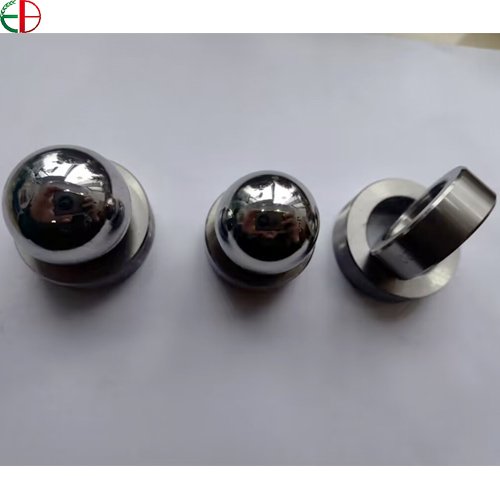
Cobalt-based alloys are not one material. Industrial Co-Cr-W-C and Co-Cr-Mo families can be supplied as investment castings, wrought products, welding consumables, powder or hardfacing overlays. Carbon, chromium, tungsten, molybdenum, nickel and the manufacturing route change carbide population, matrix behavior, hardness, toughness, corrosion response and repairability. A request for “cobalt alloy” or “Stellite equivalent” is therefore incomplete.
This guide is for industrial procurement, maintenance and engineering teams selecting cobalt-alloy wear parts, valve trim, hot-wear components or overlays. It explains alloy-family differences, product-form boundaries, casting and hardfacing controls, inspection, failure evidence and worker-safety considerations. Stellite is a Kennametal trademark; brand use and any proposed equivalent require contractual and engineering approval.

Classify the duty before selecting an alloy
| Duty | Contact/environment data | Property emphasis | Common mistake |
|---|---|---|---|
| Metal-to-metal sliding or galling | Counterface, load, speed, lubrication, temperature and cycles | Adhesive-wear resistance and compatible mating system | Selecting only by bulk hardness. |
| Abrasion/erosion | Particle size, shape, velocity, impact angle and carrier fluid/gas | Carbide support, matrix and impact tolerance | Assuming more carbide always increases life. |
| Cavitation | Pressure fluctuation, velocity, fluid, geometry and surface | Damage tolerance and suitable lower-carbon alloy/condition | Treating cavitation as ordinary dry abrasion. |
| Corrosion plus wear | Full chemistry, concentration, temperature, aeration and solids | Matrix corrosion plus mechanical removal behavior | Using chromium percentage as a corrosion guarantee. |
| Hot wear | Metal temperature, atmosphere, cycling, load and thermal gradient | Hot hardness, oxidation and thermal-fatigue response | Using room-temperature hardness as a design allowable. |
Stellite and generic cobalt-alloy terminology
Stellite is a branded family, not a generic synonym for every cobalt casting or overlay. When a Kennametal grade is required, state the grade and acceptable source/documentation. When an engineering-approved equivalent is allowed, the order must define composition, product form, process, hardness/properties, microstructure or NDT criteria and the approval route. A supplier should not relabel a generic Co-Cr alloy as a brand product.
The same nominal grade can appear in cast, powder or welding-product data with different limits and typical properties. Specify the form. Powder nominal analysis does not automatically become a casting acceptance table, and a cast coupon does not qualify a deposited overlay.
Co-Cr-W-Mo-C composition comparison
Kennametal’s official Starweld PTA powder brochure publishes nominal analyses for several Stellite powders. The values below explain alloy-family differences; they are not universal EB Castworld casting guarantees. The current brand-owner document and purchase specification control.
| Powder reference | Co | Cr, nominal % | W, nominal % | Mo, nominal % | C, nominal % | Selection signal |
|---|---|---|---|---|---|---|
| Stellite 6 | Balance | 28.5 | 4.6 | <1.0 | 1.2 | General-purpose Co-Cr-W-C wear family; route and duty still control. |
| Stellite 12 | Balance | 30 | 8.5 | <1.0 | 1.45 | Higher C/W and hardness than 6 in the listed powder data, with a toughness trade-off. |
| Stellite 21 | Balance | 27.5 | Not listed | 5.4 | 0.25 | Lower-carbon Co-Cr-Mo family used where ductility/cavitation/sliding behavior may matter. |
Nickel, iron, silicon and other limits also matter. Do not select from the five headline columns alone. Carbon and strong carbide-forming elements affect the amount and type of hard phases; chromium and molybdenum also affect the matrix and corrosion response. Processing changes size, distribution, dilution and defects.
Product form changes the engineering problem
| Product form | Process controls | Typical evidence | Boundary |
|---|---|---|---|
| Investment casting | Wax/tooling, shell, melting, pouring, solidification, heat treatment and finishing | Heat chemistry, dimensions, hardness, NDT and traceability | Cast defects and section response require casting-specific acceptance. |
| Wrought plate/bar/knife | Working reduction, direction, heat treatment, machining and surface | Mill certificate, properties and product-form traceability | Wrought data must not be copied to a casting. |
| Hardfacing rod/wire/electrode | Consumable identity, WPS/PQR, substrate, dilution, heat input and layers | Consumable certificate, procedure, welder/operator and overlay tests | Deposit chemistry/properties differ from undiluted consumable. |
| PTA/HVOF/laser powder | Powder lot/size, equipment parameters, carrier/shielding and substrate preparation | Powder certificate, procedure, thickness, hardness, bond and porosity checks | One powder chemistry can produce different deposits by process. |
| Fabricated assembly | Joining, differential expansion, machining and final inspection | Drawing, WPS, dimensions, NDT and assembly traceability | The cobalt component does not qualify the entire assembly. |
Carbides, matrix and hardness-toughness balance
Higher carbon and carbide-former content can increase hardness and abrasive response, but may reduce ductility and tolerance of bending, thermal shock or stress concentration. Lower-carbon Co-Cr-Mo alloys can emphasize matrix toughness, corrosion and cavitation response. These are general trends, not service-life predictions.
Hardness should be measured with a defined scale, method, surface and location. In an overlay, dilution and layer thickness can create a hardness gradient. In a casting, cooling rate and section size change carbide morphology and matrix condition. When microstructure is an acceptance requirement, define sampling, preparation, magnification, reference images and measurable criteria.
Investment casting and solidification controls
Cobalt-alloy investment castings may use lost-wax ceramic shells for complex shapes. Gating, feeding, shell temperature, melt cleanliness, pouring temperature and section transitions influence fill, shrinkage, porosity, hot tearing, inclusions and carbide distribution. A thin valve detail and a heavy wear block cannot be assumed to use the same process window.
| Stage | Risk to control | RFQ/quality evidence |
|---|---|---|
| Wax/tooling | Distortion, mismatch and dimensional stack-up | Approved model/drawing and first-article dimensions. |
| Shell | Cracks, inclusions, reaction and rough surface | Controlled slurry/stucco/drying and shell records when ordered. |
| Melting/pouring | Chemistry drift, oxidation, inclusions, gas and incomplete fill | Charge/heat identity, analysis and approved atmosphere/route. |
| Solidification | Shrinkage, segregation, hot spots and carbide variation | Feeding/chill plan and qualification evidence for critical sections. |
| Cut-off/finishing | Cracks, overgrinding and loss of minimum wall | Visual, dimensional and penetrant inspection at defined stages. |
Hardfacing dilution, cracking and layer design
An overlay is a system consisting of substrate, preparation, buffer if any, cobalt deposit, heat-affected zone and finishing. The first layer may be substantially diluted by the substrate. Additional layers can approach the consumable’s nominal chemistry, but restraint and heat input can increase cracking. Some hardfacing deposits develop checking cracks; whether they are acceptable depends on service, substrate, geometry and the approved specification.
- State substrate grade, condition, thickness and prior service.
- Define deposit process, consumable, minimum finished thickness and layer count.
- Specify WPS/PQR, operator qualification, preheat/interpass and cooling.
- Define whether cracks are prohibited or controlled by measurable acceptance.
- State grinding/machining, final dimensions, surface and NDT.
- Require repair mapping and purchaser approval for deviations.
Corrosion, temperature and regulated-service limits
Cobalt-chromium alloys can resist several wear and corrosion environments, but exact performance depends on alloy, product form, surface, fluid/gas chemistry, temperature, velocity, deposits and mating materials. Sulfur-bearing, reducing, oxidizing, chloride, molten-metal and high-temperature atmospheres require specific review. Brand-family statements are not corrosion-rate guarantees.
Pressure equipment, medical implants, food-contact parts, aerospace and nuclear applications use additional material, design, manufacturing and regulatory systems. A cobalt-alloy composition or ASTM/AMS grade does not certify a finished component. EB Castworld will not infer such approval without controlled requirements and evidence.
Machining, finishing and cobalt exposure
Cobalt alloys can be difficult to machine because of strength, work hardening and carbide content. Tooling, speed, rigidity, coolant, stock and surface-integrity requirements must be developed for the exact material/form. Grinding, polishing, welding and powder handling can generate cobalt-containing dust or fume.
The NIOSH Pocket Guide lists occupational exposure information for cobalt metal dust and fume, and NIOSH recommends engineering controls and work practices. The workplace must conduct its own hazard assessment, comply with applicable limits and use effective ventilation, housekeeping, PPE, respiratory protection and medical/industrial-hygiene programs. This page is not a safe-work procedure.
Inspection and quality documentation
| Control | Specify | Deliverable |
|---|---|---|
| Chemistry | Brand/UNS/AMS/AWS or customer grade, complete limits and product-analysis rule | Heat or consumable/powder lot certificate. |
| Hardness/properties | Method, scale, location, condition and acceptance | Mapped test report; tensile/other results where applicable. |
| Dimensions/surface | Drawing revision, datums, finish and minimum deposit/casting wall | Dimensional and visual report. |
| NDT | PT/RT/UT or other method, stage, coverage and acceptance | Signed reports and indication disposition. |
| Overlay qualification | WPS/PQR, substrate, dilution, layers, bond and cracking | Procedure/qualification and production records. |
| Traceability | Part, heat/lot, process, heat treatment, repair and marking | Release dossier linked to each component. |
Machining allowance, datums and final condition
Cobalt-alloy castings and overlays should be ordered with a clear relationship between as-produced geometry and the finished drawing. State machining stock, protected datums, minimum finished wall or overlay thickness and whether hardness or NDT occurs before or after machining. A deposit that meets thickness before grinding may fall below the minimum after cleanup; a casting that is locally blended may lose the wall needed to carry load.
Inspection sequence matters. Penetrant testing before finish machining can find open casting or overlay indications, while final testing checks damage introduced or exposed by machining. If radiography is required, define technique, coverage and acceptance for the actual section range. For mating surfaces, specify flatness, runout, concentricity, finish and edge condition instead of using a generic “machine complete” note.
Counterface and system compatibility
A cobalt wear surface operates against another material, lubricant or process fluid. Counterface hardness, roughness, coating, alignment and debris can dominate galling and wear. The harder cobalt grade is not automatically the safer pair: two hard, rough or poorly aligned surfaces can generate heat, vibration and transfer damage. Record both members of the tribological system and any change in lubricant, seal leakage or shaft/bore alignment.
For a repair overlay, inspect the substrate for cracking, loss of section, contamination and previous weld metal before selecting a consumable. The design authority should confirm weldability, heat input and residual-stress limits. Where dissimilar-metal dilution is unavoidable, procedure qualification should measure the finished deposit at the service surface, not only quote the undiluted powder or rod certificate.
Controlled comparison trials
When service evidence is incomplete, compare candidate alloys through a controlled trial rather than a blanket fleet conversion. Keep geometry, finish, installation, counterface and operating window as consistent as practical. Mark each part, record starting dimensions and mass, inspect at planned intervals and define removal criteria for cracking, leakage, dimensional loss or unsafe operation.
A trial report should distinguish normal run-in from progressive failure, document operating interruptions and retain removed samples. Results apply to the tested duty and configuration; they do not create a universal life multiplier. If the trial changes both alloy and geometry, the team cannot confidently assign the result to chemistry alone.
Failure analysis before changing grade
Preserve the as-found condition and record position, duty, hours/cycles, temperature, counterface, lubricant, process chemistry and prior repair. Photograph wear direction, cracks, spalls, corrosion, deformation and interface damage. Retain material for chemistry, hardness, microscopy and fracture analysis. A polished or ground fracture can destroy key evidence.
Do not automatically change from Stellite 6 to 12 or 21 because the failed part “needs more hardness” or “more toughness.” Determine whether failure came from abrasion, galling, cavitation, corrosion, thermal fatigue, casting defects, overlay dilution, substrate bending, geometry or installation. Use a controlled field trial with measurable removal criteria.
Cobalt-alloy selection table
| Dominant need | Family to evaluate | Evidence before approval |
|---|---|---|
| General galling/metal-to-metal wear | Stellite 6-type Co-Cr-W-C product in the required form | Counterface test/duty, product-form certificate and trial plan. |
| Higher abrasion with limited shock | Higher-C/W carbide-rich family such as 12-type | Impact/stress review, microstructure/hardness and geometry support. |
| Cavitation/sliding with more damage tolerance | Lower-carbon Co-Cr-Mo family such as 21-type | Fluid/pressure history, mechanical load and process/form qualification. |
| Repair overlay | Qualified cobalt consumable/powder and deposition process | WPS/PQR, substrate, dilution, thickness, NDT and finished dimensions. |
| Regulated or critical part | Exact approved material/product standard | Design authority approval and complete compliance dossier. |
RFQ checklist
- Component name, equipment, position, drawing and revision.
- Required branded alloy or approved generic grade and permitted sources.
- Product form: casting, wrought part, consumable, powder or finished overlay.
- Complete chemistry/specification, condition and traceability.
- Wear mechanism, load, speed, counterface, lubrication and impact.
- Fluid/gas chemistry, temperature, pressure, atmosphere and cleaning.
- Casting or deposition route, substrate, layer/section and repair rules.
- Dimensions, tolerances, machining, surface and minimum wall/deposit.
- Chemistry, hardness, NDT, microstructure and document requirements.
- Trial quantity, packaging, destination and required schedule.
Related products and technical pages
Review Stellite 6 castings, cobalt-alloy lost-wax castings and Stellite 6 welding rods. Compare Stellite 6K and Stellite 6. General quality assurance and factory capability pages provide context but not automatic process qualification.
Send duty, drawing and material requirements
Use the contact page to send the drawing, alloy/product form, service, substrate or counterface, inspection, quantity and destination. Final alloy, casting/deposition route and acceptance must follow approved documents.
References and engineering boundary
- Kennametal Stellite, Starweld PTA Powders.
- Kennametal, Cobalt-Based Metal Powder Nominal Compositions.
- NIOSH Pocket Guide, Cobalt Metal Dust and Fume.
- NIOSH, Criteria for Controlling Exposure to Cobalt.
Boundary: This article does not establish material equivalence, pressure/medical/aerospace approval, service life, corrosion rate or a welding procedure. The purchaser and responsible engineer approve the alloy, product form, process and safety controls.


