

Different Types of SAG Mill Plates
SAG mill plates (Semi-Autogenous Grinding mill plates) are critical components in mining and mineral processing. They protect the mill cylinder and boost grinding efficiency. SAG mills work under extreme conditions—handling large, hard ore chunks with high-impact collisions and intense abrasion. Different SAG mill plate types are engineered with specific materials and structures to withstand these harsh environments and match unique ore characteristics.
Understanding the core traits of each SAG mill plate type helps you choose the best solution. This extends mill life, cuts maintenance downtime, and maximizes ore processing efficiency.

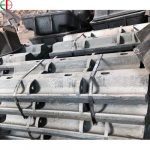

1. High-Manganese Steel SAG Mill Plates
High-manganese steel is the traditional, most common material for SAG mill plates. Its key advantages are exceptional impact toughness and work-hardening properties—perfect for high-impact SAG mill operations.
-
Core Material: High-manganese steel (11%-14% Mn) with low carbon content (0.9%-1.2%). This enhances toughness and prevents brittle fracture.
-
Key Features: Initial hardness HB200-250; surface hardness jumps to HB500+ after work hardening from continuous ore impact. Impact toughness ≥220J/cm², resisting cracks even under heavy collisions with large ore chunks.
-
Performance Highlights: Self-sharpening during operation; maintains structural integrity in high-frequency impact scenarios. Easy to cast into large, curved shapes for a perfect fit with SAG mill cylinders.
-
Typical Applications: Primary SAG mill operations handling medium-hard to hard ores (limestone, iron ore). Ideal for mines with high-impact, low-to-medium abrasion ore characteristics.
2. High-Chromium Alloy SAG Mill Plates
High-chromium alloy SAG mill plates are premium options for high-abrasion scenarios. They prioritize superior wear resistance to reduce replacement frequency.
-
Core Material: High-chromium cast iron (15%-28% Cr) blended with molybdenum, nickel, and carbon. Forms hard M7C3 carbides that greatly boost abrasion resistance.
-
Key Features: Surface hardness HRC60-68, 3-5 times more wear-resistant than high-manganese steel. Low wear rate (≤0.3kg/t ore) and good corrosion resistance to mineral slurries.
-
Performance Highlights: Maintains excellent wear resistance during long-term grinding of abrasive ores. Minimizes material loss and extends service life by 2-3 times compared to standard high-manganese steel plates.
-
Typical Applications: SAG mills processing highly abrasive ores (granite, basalt, copper ore); mining operations with high silica content in ore; large-scale mineral processing plants pursuing long-term cost savings.
3. Bimetallic Composite SAG Mill Plates
Bimetallic composite SAG mill plates combine high wear resistance and impact toughness. They offer a cost-effective solution for mixed wear scenarios (high impact + high abrasion).
-
Core Structure: Wear layer (high-chromium alloy, 15-30mm thick) + base layer (high-manganese steel/carbon steel). Bonded via composite casting with bonding strength ≥300MPa.
-
Key Features: Wear layer provides high abrasion resistance (HRC62-66); base layer ensures exceptional impact toughness (≥200J/cm²) to withstand large ore impacts. Saves 30%-50% compared to full high-chromium plates.
-
Performance Highlights: Avoids the “hard but brittle” issue of full high-chromium plates and rapid wear of pure high-manganese steel plates. Delivers balanced performance for complex ore conditions.
-
Typical Applications: SAG mills handling mixed ore types (abrasive + hard); medium-to-large mining operations seeking cost-performance balance; retrofitting existing SAG mills for better durability.
4. Rubber-Lined SAG Mill Plates
Rubber-lined SAG mill plates are specialized for energy-saving and noise-reducing applications. They protect the mill cylinder while optimizing grinding efficiency for low-abrasion ores.
-
Core Structure: Metal backing plate (carbon steel) + rubber layer (natural rubber/NBR, 20-50mm thick). Equipped with anti-slip grooves and bolted fixing for secure installation.
-
Key Features: Low hardness (Shore A 65-80) with excellent shock absorption. Reduces operating noise by 15-25dB. 30% lighter than steel plates, cutting mill energy consumption by 8%-12%.
-
Performance Highlights: Prevents ore adhesion and material buildup; reduces mill cylinder wear. Easy to replace the rubber layer without changing the entire plate, minimizing maintenance time.
-
Typical Applications: SAG mills processing low-abrasion ores (coal, gypsum); auxiliary grinding stages in mineral processing; small-scale mines prioritizing energy efficiency and noise reduction.
5. Wave/Classifying SAG Mill Plates
Wave or classifying SAG mill plates are structural-specific types. They optimize ore movement and grinding efficiency, regardless of the base material.
-
Core Material: Usually high-manganese steel or bimetallic composite (matched to ore wear conditions). Features a wave-shaped or grooved surface structure.
-
Key Features: Wave/groove design increases ore lifting height and cascading impact. Promotes ore classification, reducing over-grinding and boosting grinding efficiency by 15%-20%.
-
Performance Highlights: Ensures uniform wear of both the plate and grinding media. Reduces “empty grinding” and energy waste; compatible with most SAG mill models.
-
Typical Applications: Large-scale SAG mill operations for high-efficiency ore processing; primary grinding stages requiring uniform particle size output; mines looking to boost SAG mill throughput.
6. Key Selection Criteria for SAG Mill Plates
To choose the right SAG mill plate, match its features to your specific mining and grinding conditions:
-
Ore Characteristics: Highly abrasive ore → high-chromium alloy/bimetallic plates; High-impact hard ore → high-manganese steel plates; Low-abrasive ore → rubber-lined plates.
-
Mill Operation Goals: Energy efficiency & noise reduction → rubber-lined plates; High throughput & classification → wave/classifying plates; Long service life → high-chromium/bimetallic plates.
-
Cost Budget: High budget, long-term operation → high-chromium alloy plates; Cost-sensitive → bimetallic/high-manganese steel plates; Low maintenance cost → rubber-lined plates.
-
Mill Size & Model: Large SAG mills → high-manganese steel/bimetallic plates (high impact resistance); Small-to-medium mills → rubber-lined/high-manganese steel plates.
7. Maintenance Tips to Extend SAG Mill Plate Life
Proper maintenance greatly improves SAG mill plate performance and service life. Follow these tips:
-
Regular Inspection: Check plate tightness, wear status, and bolt integrity weekly. Replace loose bolts or worn plates promptly to avoid secondary damage to the mill cylinder.
-
Uniform Feeding: Keep ore particle size and feeding amount consistent. This prevents uneven plate wear and abnormal stress.
-
Grinding Media Management: Choose the right grinding media size and filling rate. This reduces unnecessary impact and friction on the plates.
-
Cleaning & Protection: Regularly remove ore residues and mineral slurries from plate surfaces. Store spare plates in dry, ventilated areas to prevent rust and deformation.
Why Tailored SAG Mill Plates Matter for Your Operation
Mismatched SAG mill plates cause frequent replacements, low grinding efficiency, high energy consumption, and higher operational costs. Tailored SAG mill plates—designed for your specific ore characteristics, mill model, and operation goals—protect the mill cylinder optimally, improve processing efficiency, and maximize your SAG mill investment return.
Need help selecting the right SAG mill plate for your mining operation? Share your ore characteristics, mill model, and operational goals for a free customized recommendation!
Tel: 0086- 18151503523 (What’s app)
Cell: 0086-18151503523
Fax: 0086-510-6879 2172
E-mail: sales@ebcastworld.com
EB Casting Makes Metal Better
EB Machine Makes World Better
EB Ebike Makes Your Life Better.
Wuxi Eternal Bliss Alloy Casting & Forging Co.,LTD.