
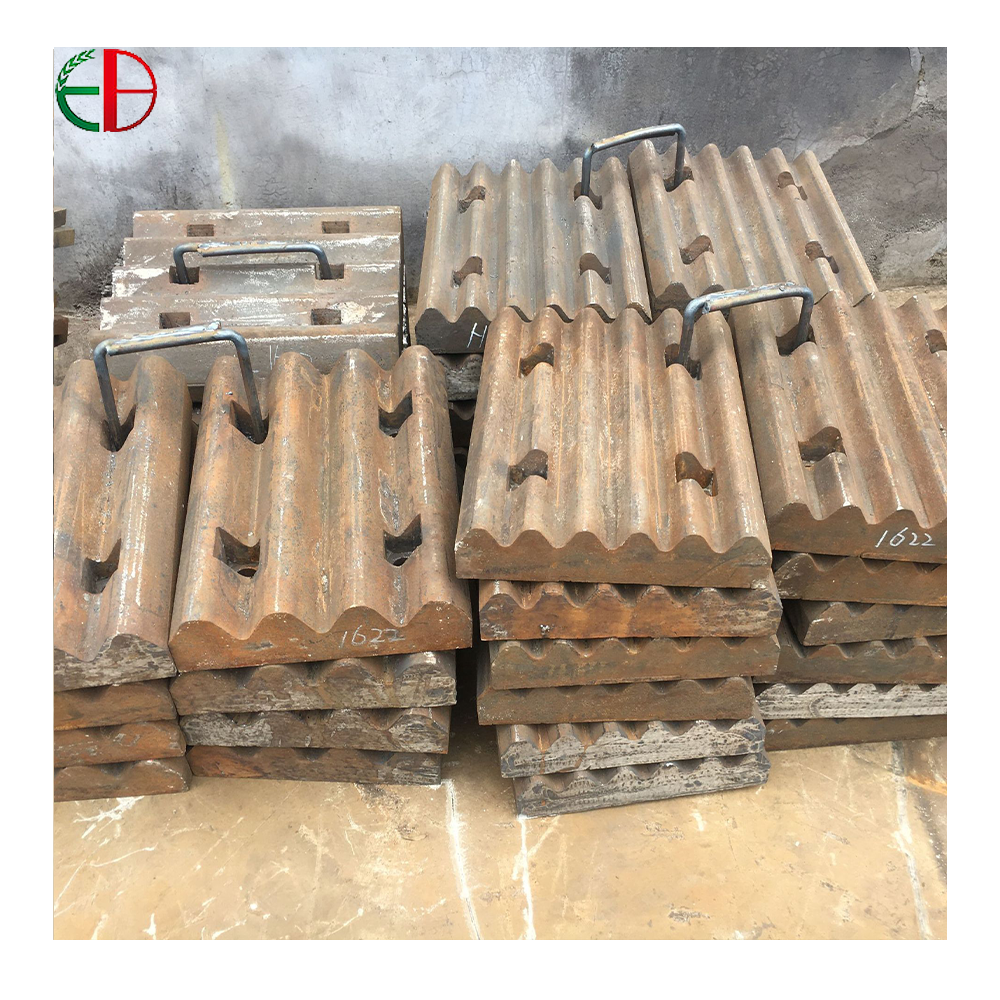
In industries like mining, construction, cement, and aggregate processing, wear and impact are constant threats to equipment performance. Manganese steel wear castings—also known as Hadfield steel castings—are the industry standard for withstanding extreme abrasion, high impact, and heavy loads. Unlike standard steel castings, manganese steel wear parts leverage unique work-hardening properties to deliver long service life, reduce downtime, and lower operational costs.
This guide breaks down the most common types of manganese steel wear castings, their key features, material properties, and ideal applications—optimized for Google SEO, with clear, concise language tailored for engineers, procurement managers, and plant operators seeking reliable, high-performance wear solutions.
What Are Manganese Steel Wear Castings?
Manganese steel wear castings are specialized wear components made from high manganese steel (typically 11-15% manganese, 1.0-1.4% carbon)—commonly called Hadfield steel, named after its inventor. The defining feature of manganese steel is its work-hardening ability: when exposed to impact or abrasion, the surface layer hardens (up to 550 BHN) while the core remains tough and ductile, preventing cracking or fracture.
These castings are manufactured via precision sand casting, investment casting, or centrifugal casting—processes that preserve their unique mechanical properties, ensuring they perform reliably in the harshest industrial environments. Manganese steel wear castings are used across industries where wear, impact, and durability are non-negotiable.
Key Benefits of Manganese Steel Wear Castings
-
Exceptional Work-Hardening: Surface hardens under impact/abrasion, while the core stays tough—no brittle failure.
-
Superior Impact Resistance: Absorbs heavy impact without cracking, ideal for high-impact applications like crushing.
-
High Wear Resistance: Outperforms standard steel in abrasive environments, extending service life.
-
Good Castability: Easily cast into complex shapes (e.g., liners, jaws, hammers) for custom equipment needs.
-
Cost-Effective: Longer service life reduces replacement frequency and downtime, lowering long-term costs.
Types of Manganese Steel Wear Castings: Features & Applications
Manganese steel wear castings are tailored to specific industrial applications, with variations in manganese content, casting process, and design. Below are the most common types, each engineered to meet unique wear and impact requirements.
1. Standard Manganese Steel (11-14% Mn) Wear Castings
Standard manganese steel wear castings are the most widely used type, with a balanced composition of 11-14% manganese and 1.0-1.2% carbon. They are designed for general-purpose wear and impact applications across industries.
-
Core Features: Work-hardens to 400-550 BHN under impact; high toughness (200+ J/cm²); good ductility; compatible with precision sand casting for complex shapes.
-
Manufacturing Advantages: Cost-effective for high-volume production; easy to cast into custom sizes; minimal post-machining required.
-
Key Applications: Mining crusher jaw plates, impact crusher blow bars, cone crusher liners, aggregate crusher wear parts, cement mill liners.
2. High Manganese Steel (14-18% Mn) Wear Castings
High manganese steel wear castings feature a higher manganese content (14-18%), delivering enhanced work-hardening and impact resistance for extreme conditions. They are used in applications with heavy impact and severe abrasion.
-
Core Features: Superior work-hardening (up to 600 BHN); exceptional toughness and ductility; resistance to heavy impact and sliding abrasion; suitable for thick-walled components.
-
Manufacturing Advantages: Optimized for extreme environments; maintains integrity under repeated impact; customizable for large, heavy-duty parts.
-
Key Applications: Large mining crusher hammers, dredge buckets, rock crusher anvils, quarry crusher liners, heavy-duty grinding mill parts.
3. Manganese Chromium Alloy Wear Castings
Manganese chromium alloy wear castings combine manganese (11-14%) with chromium (1-3%), enhancing wear resistance while preserving the work-hardening and toughness of standard manganese steel. They are ideal for applications with both abrasion and impact.
-
Core Features: Improved wear resistance vs. standard manganese steel; excellent work-hardening; good toughness; resistance to both impact and sliding abrasion.
-
Manufacturing Advantages: Balances wear and impact performance; cost-effective vs. high-chromium iron; compatible with custom casting designs.
-
Key Applications: Slurry pump liners, conveyor wear plates, crusher side liners, vibrating screen decks, mining hopper liners.
4. Heat-Treated Manganese Steel Wear Castings
Heat-treated manganese steel wear castings undergo annealing or quenching/tempering to optimize their mechanical properties—enhancing hardness, toughness, and wear resistance for specialized applications.
-
Core Features: Customizable hardness (350-600 BHN); improved fatigue resistance; enhanced work-hardening rate; better dimensional stability.
-
Manufacturing Advantages: Tailored to specific operating conditions; extends service life in high-stress applications; reduces deformation.
-
Key Applications: High-performance crusher parts, industrial shredder blades, heavy machinery wear components, high-temperature wear applications.
5. Custom Manganese Steel Wear Castings
Custom manganese steel wear castings are engineered to match specific equipment models, dimensions, and operating conditions. They are designed for non-standard or specialized machinery where off-the-shelf parts do not fit.
-
Core Features: Tailored to exact dimensions and shapes; customizable manganese content (11-18%); optimized for specific wear/impact needs; perfect fit for custom equipment.
-
Manufacturing Advantages: Flexible design options; compatible with all casting processes; meets unique equipment requirements.
-
Key Applications: Custom crusher liners, specialized mining equipment wear parts, unique industrial machinery components, prototype wear parts.
Manganese Steel Wear Castings: Material Properties Comparison
The performance of manganese steel wear castings depends on their manganese content and alloy additions. Below is a quick comparison of key properties:
|
Manganese Steel Type
|
Manganese Content
|
Hardness (BHN)
|
Impact Resistance
|
Wear Resistance
|
|---|---|---|---|---|
|
Standard Manganese Steel
|
11-14%
|
400-550 (work-hardened)
|
⭐⭐⭐⭐⭐
|
⭐⭐⭐
|
|
High Manganese Steel
|
14-18%
|
500-600 (work-hardened)
|
⭐⭐⭐⭐⭐
|
⭐⭐⭐⭐
|
|
Manganese Chromium Alloy
|
11-14% + 1-3% Cr
|
450-580 (work-hardened)
|
⭐⭐⭐⭐
|
⭐⭐⭐⭐
|
|
Heat-Treated Manganese Steel
|
11-18%
|
350-600 (customizable)
|
⭐⭐⭐⭐
|
⭐⭐⭐⭐
|
How to Choose the Right Manganese Steel Wear Casting
Selecting the right manganese steel wear casting depends on your application’s specific wear, impact, and equipment requirements. Use these key criteria to make an informed decision:
-
Impact Level: Heavy impact (e.g., primary crushing) → High manganese steel (14-18% Mn); moderate impact → Standard manganese steel (11-14% Mn).
-
Abrasion Severity: Severe abrasion + impact → Manganese chromium alloy; general abrasion → Standard manganese steel.
-
Equipment Type: Crusher jaws/blow bars → Standard or high manganese steel; pump liners/screens → Manganese chromium alloy.
-
Custom Needs: Non-standard equipment → Custom manganese steel wear castings; high-stress applications → Heat-treated manganese steel.
Why Manganese Steel Wear Castings Outperform Other Wear Materials
Compared to high-chromium iron, alloy steel, or ductile iron, manganese steel wear castings offer distinct advantages for high-impact, abrasive applications:
-
Better Impact Resistance: High-chromium iron is brittle and prone to cracking under impact—manganese steel’s ductile core prevents fracture.
-
Self-Hardening: Unlike alloy steel, manganese steel hardens in use, adapting to increasing wear and impact over time.
-
Cost-Effective Long-Term: Longer service life reduces replacement frequency and downtime, even with a slightly higher upfront cost.
-
Versatility: Cast into complex shapes, making them suitable for a wide range of equipment and applications.
Choosing the right manufacturer is critical to getting high-quality manganese steel wear castings. Look for suppliers with expertise in manganese steel casting, strict quality control (e.g., ISO 9001), experience in your industry, and the ability to customize parts to your exact requirements—ensuring your wear castings deliver maximum durability and performance.
Need help selecting the right manganese steel wear casting for your equipment? Share your application, equipment model, and wear challenges—and we’ll provide a free customized recommendation to optimize service life, reduce downtime, and lower costs!