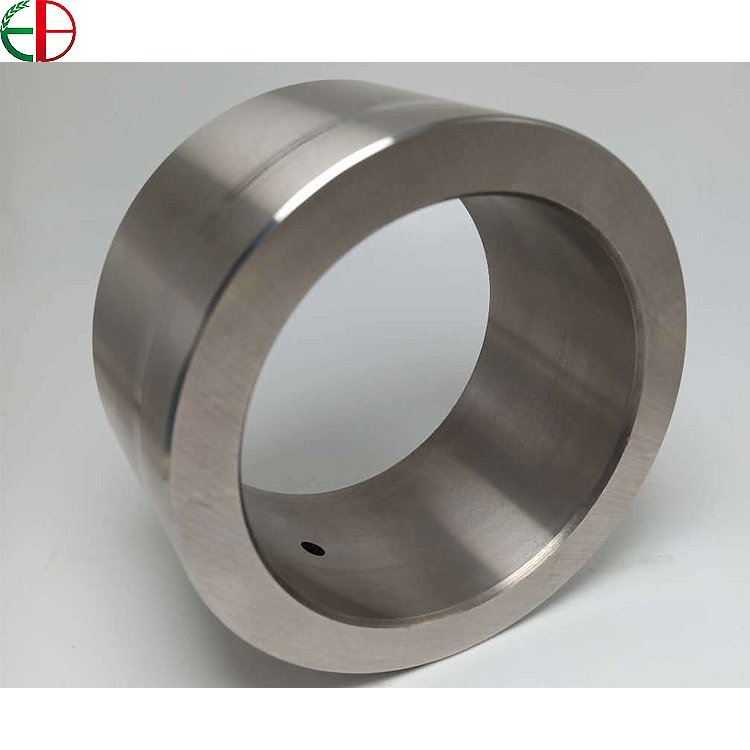
Semi-autogenous grinding mill liners
The exclusive liner is designed for the semi-autogenous grinding “autogenous grinding + steel ball grinding” working conditions.
Precise feature matching, solving the pain point of heavy load!
Choose the right one and extend the service life of the liner plate by 3 to 5 times.
Save 60,000 to 120,000 yuan in replacement costs each year.
The mill operates continuously without interruption.
Daily production capacity has steadily increased by more than 15%.
I. Core Product Features of Semi-Autogenous Grinding Machine Liners
Double wear-resistant structure design: The working surface is made of high manganese steel or high chromium cast iron.
The back is reinforced with ribs.
The thickness of the wear-resistant layer reaches 30 to 50mm.
Super impact toughness: After water toughness treatment or overall quenching.
It is not prone to cracking or deformation.
The semi-autogenous grinding feed has a large particle size and strong impact.
Ordinary backing plates chipped within 1 to 2 months.
It can withstand for 6 to 12 months.
The cylinder fits precisely: The arc is customized according to the model of the semi-autogenous grinding machine.
The protection of equipment is more thorough.
Optimized ore guiding to enhance efficiency: The surface adopts wavy or trapezoidal ore guiding teeth.
Reduce “empty grinding” and “overgrinding”.
Excellent high-temperature stability: Can withstand temperatures below 500℃ for a long time.
The frictional heat from grinding and the residual heat from slag will not cause the material to soften.
The performance is always stable.
Ii. Four Core Advantages Derived from Characteristics
Heavy-duty wear-resistant and long service life: Dual wear-resistant features + impact-resistant design.
In semi-autogenous mills with a daily processing capacity of 1,000 to 5,000 tons.
Stable use for 8 to 15 months.
It is 2 to 3 times that of ordinary liners.
There is no need to frequently shut down the machine to replace the liner.
It is especially suitable for the large production capacity demand of 24-hour continuous grinding in mines.
Adapted to complex grinding conditions: balancing “self-grinding impact of ore” and “grinding wear of steel balls”.
Whether it is hard rock (granite, iron ore) or mixed ore.
All can be precisely adapted.
Ordinary liners are prone to premature aging in semi-self-grinding complex working conditions.
The performance of the dedicated liner does not decline.
The grinding effect is stable.
The cylinder protection has been comprehensively upgraded: it closely adheres to the cylinder.
Prevent direct friction between the ore and the steel balls.
Avoid thinning and leakage of the cylinder.
Extend the overall service life of the semi-autogenous mill by 2 to 3 times.
The cost of the semi-autogenous mill cylinder is very high.
High-quality liners can reduce maintenance costs.
Reduce the cost of equipment investment.
Convenient and efficient installation and maintenance: It adopts a segmented design.
The weight of each piece should be controlled between 80 and 150 kilograms. Cooperate with the hoisting holes.
It can be installed manually and with simple equipment.
Save 30% of installation time.
The liner bolts are equipped with anti-loosening washers.
It is not easy to loosen in a vibrating environment.
Reduce the maintenance workload of regular tightening.
Iii. Five precise application scenarios
Semi-self-grinding coarse crushing in mines: grinding super-hard ores such as granite and iron ore.
The dual wear-resistant properties are fully exerted.
Ensure the continuous operation of the mineral processing line with high production capacity.
Semi-self-grinding treatment of metallurgical slag: Processing high-temperature waste slag such as steel slag and iron slag.
High-temperature resistance and corrosion resistance.
It meets the strict requirements of slag grinding.
Non-ferrous metal ore grinding: Grinding copper ore, lead-zinc ore and other ores.
The design of the guiding teeth enhances the uniformity of grinding.
Help improve the efficiency of subsequent selection.
Large-scale combined grinding line: Suitable for large-scale mines with multiple semi-autogenous grinding machines working in tandem.
The service life of the liners is uniform.
It can be replaced centrally.
Reduce the impact of decentralized downtime.
Semi-autogenous grinding of chemical raw materials: Grinding chemical residues containing weak acid media.
It has outstanding corrosion resistance.
Prevent the liner from rusting and contaminating the materials.
Comply with production standards.
Ⅳ. Four Key Criteria for Selecting the Right Liner
Material matching grinding material: For super-hard ores, high manganese steel liners are selected.
High-chromium cast iron liners are selected for medium-hard ores.
The model of the mill that is structurally compatible: Select the thickness of the liner plate based on the diameter of the semi-autogenous mill and the length of the cylinder.
Precise arc matching.
Size mismatch can lead to excessive clearance.
The liner is prone to displacement.
It not only affects the grinding efficiency.
The cylinder was worn out again.
Process guarantee feature performance: Give priority to choosing the liner plate with “lost foam casting + water toughness treatment”.
There are no sand holes or cracks inside, and the hardness is uniform.
It has a 30% longer service life than sand casting.
Poor-quality liners cannot exert their impact resistance and wear resistance.
It may age prematurely after three months of use.
Verify the mechanical performance parameters: Request the supplier to provide a report.
Ensure that the impact toughness is ≥180J/cm² and the surface hardness is HB450-600.
Avoid being “hard and brittle” or “tough and not wear-resistant”.
Ⅴ. Three Practical Tips for Extending Your Life
Control the feed particle size: Feed strictly in accordance with the regulations of the semi-autogenous mill.
Pre-crush super-large ores first.
Avoid extreme impacts that may damage the wear-resistant layer.
This leads to the attenuation of characteristics.
Excessive impact will cause the wear-resistant layer of the liner plate to fall off prematurely.
Regular inspection and tightening: Shut down the machine every 15 days to check the tightness of the bolts.
Tighten it promptly if any looseness is found.
Avoid the displacement of the liner plate and the resulting gap.
The gap will damage the bonding characteristics.
Not only grinding the liner plate.
It will also directly wear out the cylinder body.
The maintenance cost has doubled.
Reasonably control the filling rate: The amount of steel balls filled should be controlled at 8% to 12% of the cylinder volume.
It conforms to the semi-self-grinding characteristic.
Avoid excessive steel balls squeezing the liner.
Accelerate the wear of the wear-resistant layer.
A moderate filling amount can not only ensure the grinding efficiency.
It can also protect the characteristics of the liner plate.
Extend the service life. Read More